Former nurse cancer-free after pioneering treatment for ‘inoperable’ ovarian cancer
A former nurse who was diagnosed with what was thought to be inoperable ovarian cancer is now cancer-free thanks to pioneering surgery at University Hospital Southampton (UHS).
Caroline Ainslie, 60, who lives in Southampton, was diagnosed in March after feeling fatigued and not fully recovering from a chest infection over the winter period.
After undergoing tests, she was informed the cancer had spread to multiple areas and her only treatment option would be three initial rounds of life-extending chemotherapy.
However, her response to treatment exceeded expectations, significantly reducing the disease and enabling her to undergo surgery using a pioneering treatment known as hyperthermic intraperitoneal chemotherapy (HIPEC).
The procedure involves surgically removing cancerous tumours, then delivering heated chemotherapy in liquid form directly into the abdomen. This is left for 90 minutes to destroy any remaining cancer cells.
“Being told I had cancer was like a bolt out of the blue”, said Caroline, who previously worked at UHS as a divisional head of nursing. “I hadn’t been feeling myself which prompted me to get checked, but to be told that I had inoperable ovarian cancer and that it had spread everywhere was such a shock.
“I was lucky enough to retire at 55 and was living life to the full with my wife Katie and our dog Nellie. I had taken part in the Great South Run just months before, had been on a recent skiing holiday and had been looking forward to an upcoming cycling holiday to Japan that was just weeks away.”

Ovarian cancer is often called a "silent killer" because its early signs are vague and easily mistaken for common digestive or menstrual issues. Key warning signs include persistent bloating, pelvic or abdominal pain, feeling full quickly while eating, and a frequent or urgent need to urinate.
These symptoms are considered "silent" not because they don't exist, but because they are subtle and often progress before a definitive diagnosis is made.
It is the sixth most common cancer in women, with around 7,500 women diagnosed in the UK each year. Around two-thirds of cases are diagnosed at a late stage, when treatment options can be more limited, and the disease claims more than 4,000 lives annually.
Since establishing its HIPEC service in 2022, UHS has become a national leader in the treatment, recently completing its 50th procedure for ovarian cancer, placing it among the most experienced centres in the UK.
Mr David Constable-Phelps, consultant gynaecologist and gynaecological oncology surgeon at UHS, introduced HIPEC for ovarian cancer at UHS and led the team who carried out Caroline’s surgery.
He said: “This was a highly complex case. By the time Caroline's cancer was diagnosed, it was very advanced and had spread to multiple areas, including the abdominal wall, diaphragm, liver and bowel.
“Remarkably, she responded so well to chemotherapy that surgery, which had initially not been possible, became a viable option. During surgery, we discovered the tumour on the liver and diaphragm was also stuck to Caroline’s right lung.”
Caroline underwent a complex 12-hour operation, during which surgeons were able to remove all visible cancer. The procedure included a full hysterectomy and the removal of tumours from the lining of her abdomen, liver, diaphragm, lungs, lymph nodes and colon, before HIPEC treatment was administered.
Mr Constable-Phelps added: “Our aim during surgery was to remove all visible signs of Caroline’s cancer and HIPEC was then used to target any microscopic disease that could not be seen with the naked eye. HIPEC involves filling the abdomen with chemotherapy heated to 42 degrees and circulating it for 90 minutes at the end of the operation.
“Caroline will now receive further intravenous chemotherapy to complete her treatment and she will continue to be monitored closely as part of her ongoing care. At this point there is no visible evidence of cancer, and this was not an outcome we believed would be possible when Caroline was first diagnosed."
Caroline said: “I feel incredibly fortunate that Southampton is my local hospital and that this specialist treatment was available to me.
"My surgery wasn't without its challenges and took longer than expected, as the team had to call in a thoracic surgeon when they discovered part of the cancer was stuck to my lung.
"The past few months have been a whirlwind. I went from being told my cancer was inoperable to responding so well to chemotherapy that surgery became possible. Having the opportunity to undergo this treatment and have the cancer removed has given me real hope for the future."
Caroline is now recovering from surgery and will undergo two further rounds of chemotherapy, while continuing to be monitored closely as part of her follow-up care.
"I'm absolutely certain that being fit and healthy before my diagnosis helped me enormously, both in how I responded to chemotherapy and in recovering from surgery," said Caroline. "Alongside that, maintaining a positive mindset has helped me through some very difficult times and continues to motivate me as I work towards getting back to the active person I was before."
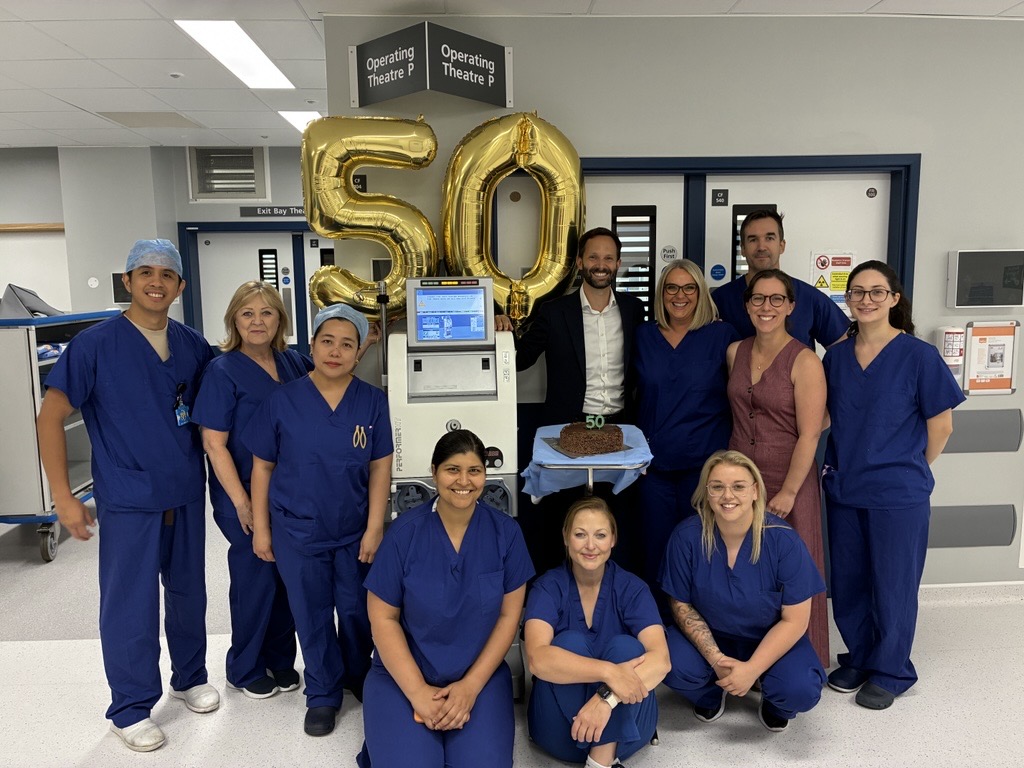
Dr Rebecca Newhouse, gynaecological oncology subspecialty registrar at UHS, said: “The introduction of HIPEC at UHS has been a truly collaborative effort, and its success is testament to the dedication and expertise of our theatre, nursing, anaesthetic, surgical and management teams.
"This innovative treatment offers additional survival benefits for selected patients and is available at only a small number of cancer centres across the UK. We are proud to provide this specialist care not only for patients in Southampton, but also for those referred from across the region and beyond.
"We were delighted to recently complete our 50th HIPEC procedure, an important milestone that reflects UHS's position as one of the UK's leading centres in this field."
With growing evidence supporting its use in selected patients, more NHS cancer centres are exploring the introduction of HIPEC treatment. While this case involved ovarian cancer, the treatment is also used for selected patients with other cancers that have spread within the abdomen, including bowel and appendix cancers.
The introduction of HIPEC at UHS was made possible through a donation from PLANETS Cancer Charity, helping to expand treatment options for patients with ovarian and other cancers.
Neil Pearce, chairman of PLANETS and a retired consultant liver and pancreatic surgeon, said: “We are extremely proud to have been able to fund the use of this revolutionary cancer treatment at UHS and stories such as Caroline’s demonstrate the impact the charity – and all our supporters – have in saving and transforming lives.”